
Our unique, historic Cement Works site in Warkworth, faces an uncertain future. Insufficient weed and arbour control, and a lack of adequate protection from vandalism, has accelerated its decline. We believe it can and should be saved from further deterioration. This site has the potential to become a well-utilised, cherished, and protected asset to our Warkworth community.
There are many ways you can help – we are only just getting started. Please register your contact details and we will keep you updated.
The benefits of preserving this unique heritage site
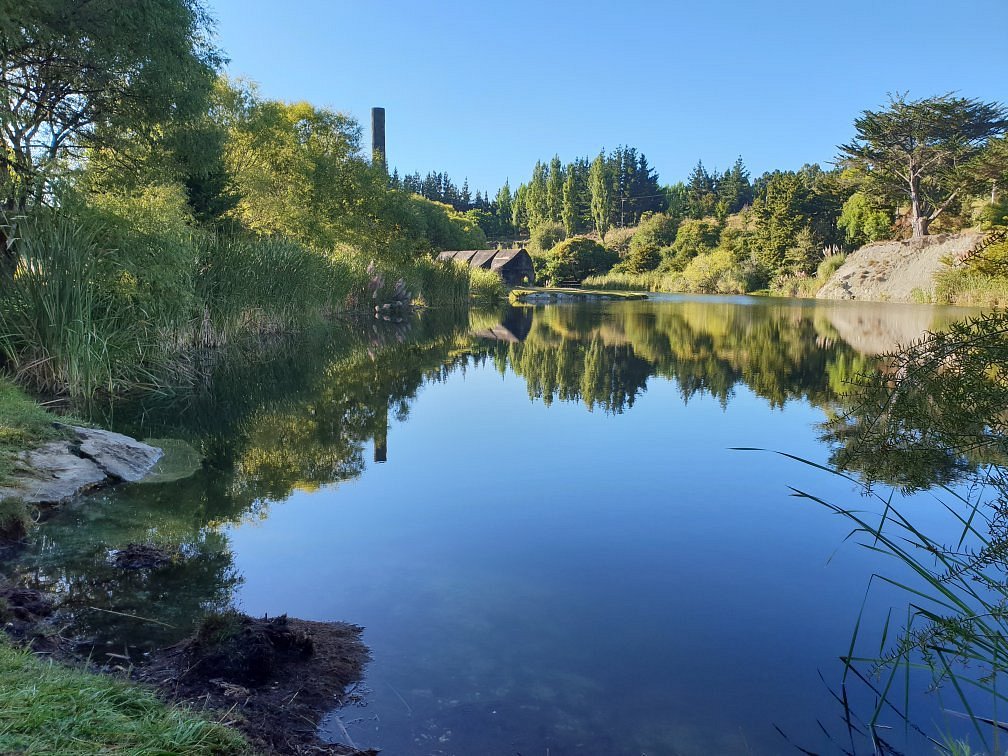
The Cement Works Warkworth is a picturesque location that serves as a reminder of New Zealand's industrial history and the social fabric of early Warkworth. The remaining ruins are a valuable source of information on the early production of Portland cement, and provide a physical indication of the scale of this ambitious enterprise.
Warkworth is a unique, riverside township, founded in 1856.A local heritage trail is already available for visitors to view the many historic buildings and sites that lend the town its charming ambience. The Cement Works is currently a popular picnic and swimming spot in Warkworth, during the summer season. It has the potential to become a major tourist attraction that could bring economic benefits to the local community.
The Cement Works at Warkworth has major historical value as a significant industrial site and an important part of our local history. It is recognised by Heritage New Zealand as a Category 1 historic place, and is also a New Zealand Archaeological Association recorded archaeological site. It was recognised in the IPENZ “Engineering to 1990” project, when a plaque was unveiled to mark its significance as part of the development of the nation.
The Cement Works Warkworth Conservation Trust achieved charitable status with the Charities Commission on the 17 Aug 2021. Registration Number: CC59346.
The Board of Trustees are a team of dedicated professionals and concerned citizens who wish to see this iconic landmark preserved for future generations; to save the site from further deterioration; and to help transform the site into a well-utilised, protected asset for our Warkworth community.
The founder of New Zealand’s cement industry, Nathaniel Wilson (1836–1919), emigrated from Glasgow with his family when he was six years old. Nathaniel initially trained as a shoemaker, but in 1864 he purchased a small piece of land adjacent to his parents block south of Warkworth village.
Close by, John Southgate had been making lime since 1851 by burning local limestone in a kiln. With limestone deposits on his land Nathaniel decided to attempt to make lime himself, building his own lime kiln in 1866. With this he started manufacturing Roche lime, used in plaster and mortar.
Nathaniel became interested in Portland cement in 1883 after reading Henry Reid’s book Science and Art of the Manufacture of Portland Cement. After many experiments, by 1885 Nathaniel and his brothers, John and James, began trading as J. Wilson and Company. Theirs was the first enterprise to commercially manufacture Portland cement in the Southern Hemisphere.
Early production was challenging because of the variability of the local limestone. This was eventually overcome, with advice from Mr Pond, by adding shells collected from the Mahurangi River, and later from Clevedon, to increase the lime content. The coke supplied by Auckland Gas Company also caused problems, and for a short period Wilson’s manufactured their own coke using Westport coal.
There was a prejudicial preference by the authorities for imported cement. However, the Wilsons benefitted from the intensive late 19th century public works programme, which dramatically increased the demand for cement. By 1893 it was necessary to make major additions to their plant, including installing more boilers for powering the kilns.
The Wilsons also increased production by utilising the latest in overseas technology, which was identified by Nathaniel’s engineer son William during a trip to the United States of America in 1898. As a result, rotary kilns and ball and tube grinding mills were installed. This meant annual production grew from 1,524 tonnes to 7,620 tonnes between 1897 and 1902. With further expansion of the works in 1903 the annual production rose to 20,220 tonnes. At this time other companies established cement works at Whangarei Harbour’s Limestone Island and at Milburn near Dunedin. By 1910, 180 people were employed at the Mahurangi works and it was the major employer in Warkworth.
The ready availability of Portland cement from the beginning of the 20th century enabled rapid development of durable structures and port facilities, particularly in Auckland. Notable projects using Wilson’s cement included the Rangitoto Beacon, Grafton Bridge and Queen’s Wharf, as well as the Rotorua’s Bath House and Napier’s breakwater.
Leading up the war, the cement business in Warkworth was booming. Known from 1903 as John Wilson and Company Ltd, the company reported a substantial increase in trade from 1906-1907, acquiring more land and doubling the size of the plant to keep up with demand.
In 1907 the company’s name was changed to Wilsons Portland Cement Company Ltd, and in 1908 it reported the most successful year to date. Profits continued to soar in the next two years, and the Grafton Bridge, which opened in 1910, was held up as an example of the high quality of their cement. Production peaked in 1910, with 120 tons of cement and 100 tons of lime being produced per week, with a workforce of 180 men.
Building work and additions to their fleet continued. By 1911 the land held by the company amounted to 827 acres, with “sufficient stone above river level to keep the works going at an increased output for generations.”
From 1912 the company was threatened by strikes, which seriously affected the business by 1913. The business also faced a lack of coal from Hikurangi during the 1913 General Strike. The workforce was reduced somewhat. Competition in the cement business compounded the problem, and by mid-1914 the company suffered considerable loss of trade.
When the war began later in 1914, the local newspaper reported that Warkworth derived a direct benefit from the war due to the demand for cement. It was anticipated that additional men would be employed at the cement works to deal with the demand. In 1916, a 140ft ferro-concrete chimney was constructed on the site replacing two worn-out iron chimneys. An additional water service was also installed that year to provide security against fire.
Early in the war, Australia faced a shortage of cement due to the shutting out of German supplies. In October 1914 steamers were loading regularly at Mahurangi for Australian ports with cargoes of cement from the Wilson Portland Cement Company.
Wilsons, Dominion, and New Zealand Portland Cement agreed to a merger in 1918, forming the new company, Wilsons (New Zealand) Portland Cement Company Ltd. Thomas Wilson, who had managed the Warkworth plant since 1910, moved to Whangarei in 1918 to become a manager at the Portland plant. His vacant house in Warkworth was used as a temporary hospital for influenza patients in November 1918.
Although Wilson’s invested heavily in new machinery and processes, by 1918 the company was voluntarily wound up and amalgamated with the New Zealand Portland Cement Company. The company’s works were at Limestone Island where most of the cement was then produced, while its Mahurangi works focused on hydrated lime. By 1926 the closure of the works was imminent and machinery was transferred to Portland (near Whangarei). The Mahurangi works closed in 1929.
Recent vandalism to several chimney bases has significantly accelerated the decline in structural integrity, and are a safety risk for anyone venturing inside the fence line.
Using these structures for graffiti is a safety issue as well as an eyesore on this valuable heritage site that deserves to be better preserved.
We are currently exploring funding & prioritisation avenues with Auckland Council to have this addressed.

If you would like to be involved or reach out to us, we’d love to hear from you.


